
A battery is not a business case. The value it creates is.
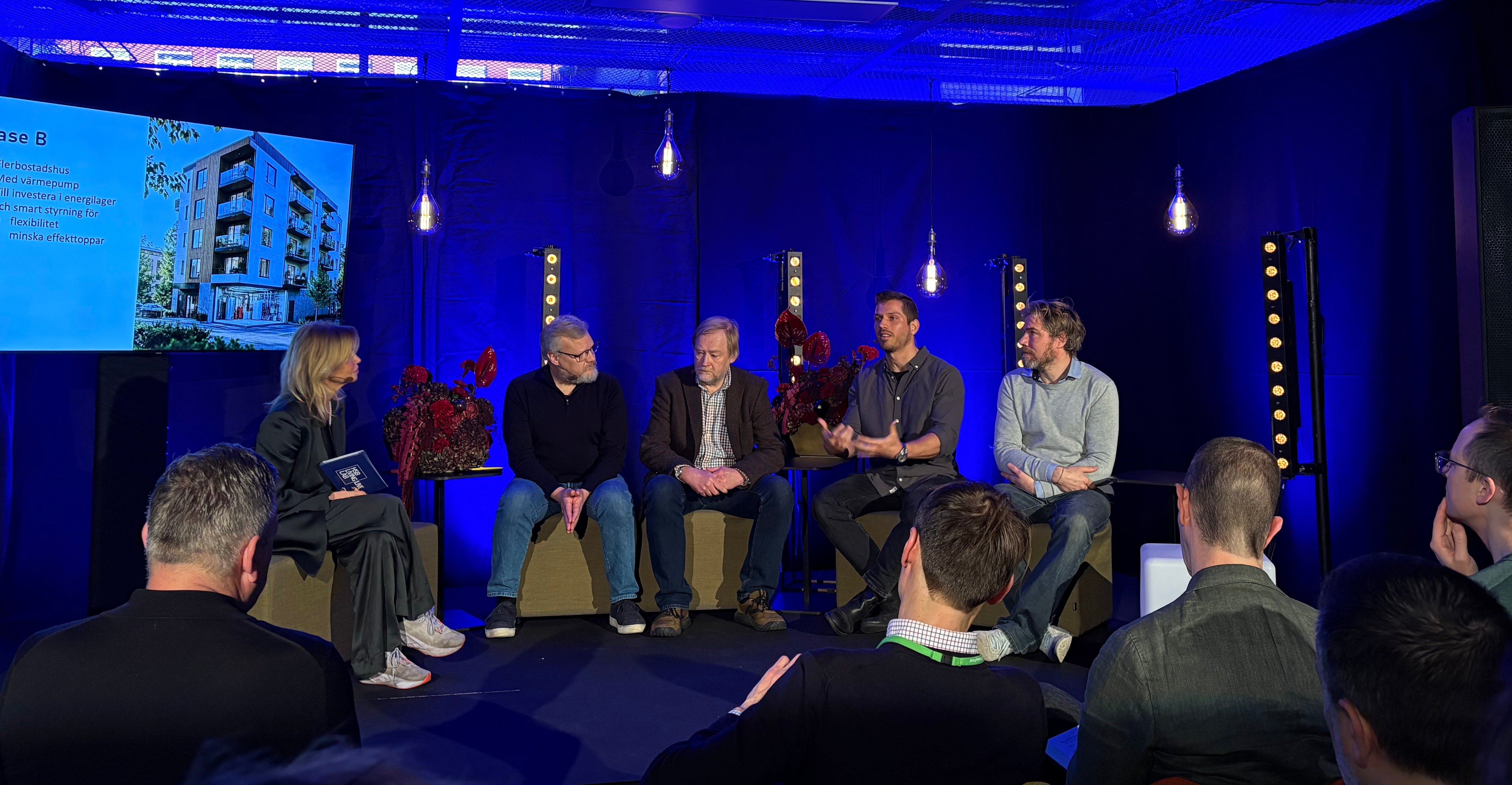
That was one of the main takeaways from yesterday's discussion at HSB Living Lab: “Energy in the buildings of the future: energy storage or not - and for whom?”
Rivus’ co-founder and COO Andreas Kölling joined a panel moderated by Anna Frankzen Starrin. The discussion brought together David Steen of Chalmers, Lars Holmquist of Goteborg-Energi, Mikael Rosén of HSB and Andreas of Rivus, representing research, the grid operator, housing associations and energy storage providers. A few points stood out:
1. There is no one-size-fits-all answer (no surprise here!) - the battery’s value and payback time depends on the building, its energy use and the services it can provide, alongside the value of other energy efficiency measures such as flexibility.
2. Strong battery business cases combine several value streams - and can be especially attractive in sites with existing solar panels. The key value streams include frequency regulation, energy arbitrage and reduced peak fees. Rivus’ simulations found that adding a battery to an existing PV installation often offered a stronger case than investing in PV and storage at the same time. Mikael Rosén highlighted this point too as Sweden’s 60 öre/kWh tax reduction for eligible microproduction of solar electricity ended on 1 January 2026, strengthening the incentive to use more solar electricity on site.
3. The value of energy storage capacity will grow overtime. As more wind and solar power is added to the electricity system, shifting energy from periods of surplus to periods of higher demand and prices could make up a larger share of battery value. Rivus’ simulations of >25 commercial sites in SE3 and SE4 illustrate how the value mix has changed: frequency regulation provided around 80% of simulated battery value in 2024, compared with half in 2025, as energy arbitrage and reduced peak fees contributed a larger share.
4. Resilience matters, even if it doesn’t show up in a typical payback calculation. Island operation can keep critical equipment running during a grid disruption or cyberattack - for example, the fridges in an ICA or Willys grocery store. Each operator needs to decide what that resilience is worth.
For property owners, housing associations and businesses, the practical starting point is to assess the site’s specific energy use profile, solar production, grid tariffs, peak fees and access to flexibility markets - and then run the numbers. In many cases, a battery can be part of an attractive solution, alongside flexibility, PV and demand management.
Since 2016, HSB Living Lab has been a real-life test environment for sustainable housing innovations, with residents, around 2,000 sensors and more than 250 research projects. It is also the partner for Rivus’ first customer pilot, in collaboration with HSB and Bengt Dahlgren AB.
Thank you to HSB Living Lab, Anna and the fellow panelists for a thoughtful discussion!
A recording of the seminar is available here: https://www.youtube.com/live/kIwhH29NMV4?si=AzNL2j_gU1hIwuAP


